
COMMERCIAL CASE STUDY
Atrium Humidity Control Case Study - East Pass Towers II Condominium
Independent Dehumidification for a Multi-Story Residential Building
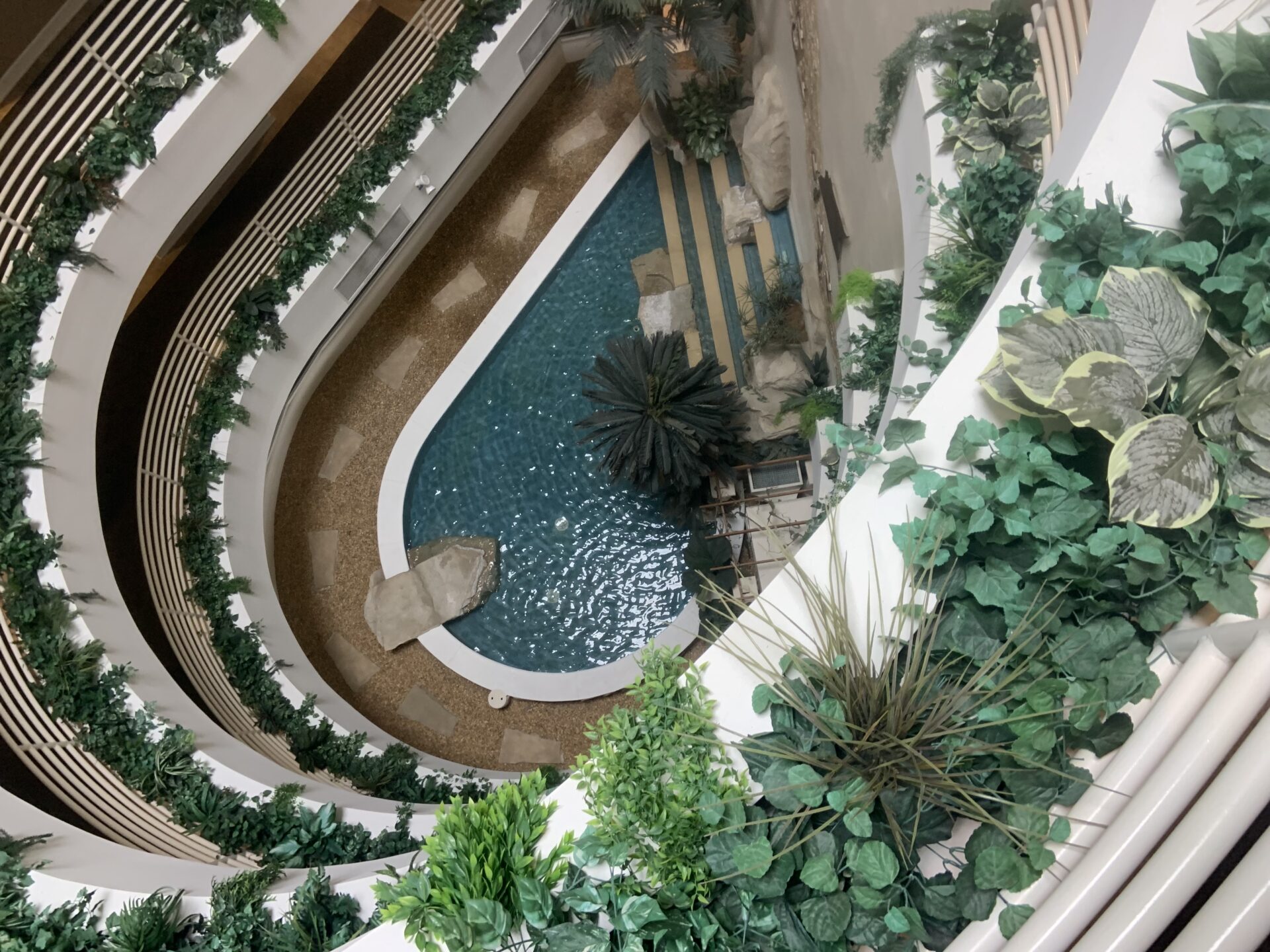
Humidity Challenges in a Multi-Story Condominium Atrium
East pass Towers II, a seven-story residential condominium complex located in Destin, Florida, experienced persistent humidity problems within its central atrium common area.
The building features a large open atrium extending from the ground floor through all nine floors, with interior corridors and balconies overlooking the space. A decorative indoor water feature in the atrium contributed additional moisture to the air through evaporation.
Property management reported condensation on flooring, musty odors in corridors, and elevated humidity levels throughout the 7-story space. In addition, the space was reported as uncomfortably clammy.
Southern Climate Solutions was engaged to evaluate the building and design a system capable of stabilizing humidity independently from the existing HVAC system.
Measured Performance Results After Installation
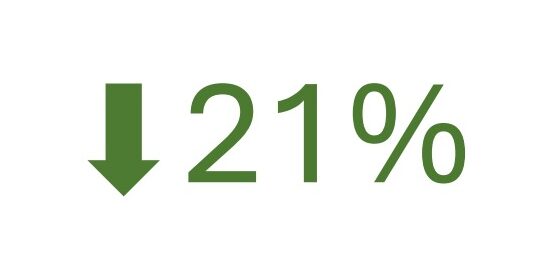
Atrium Humidity Reduction
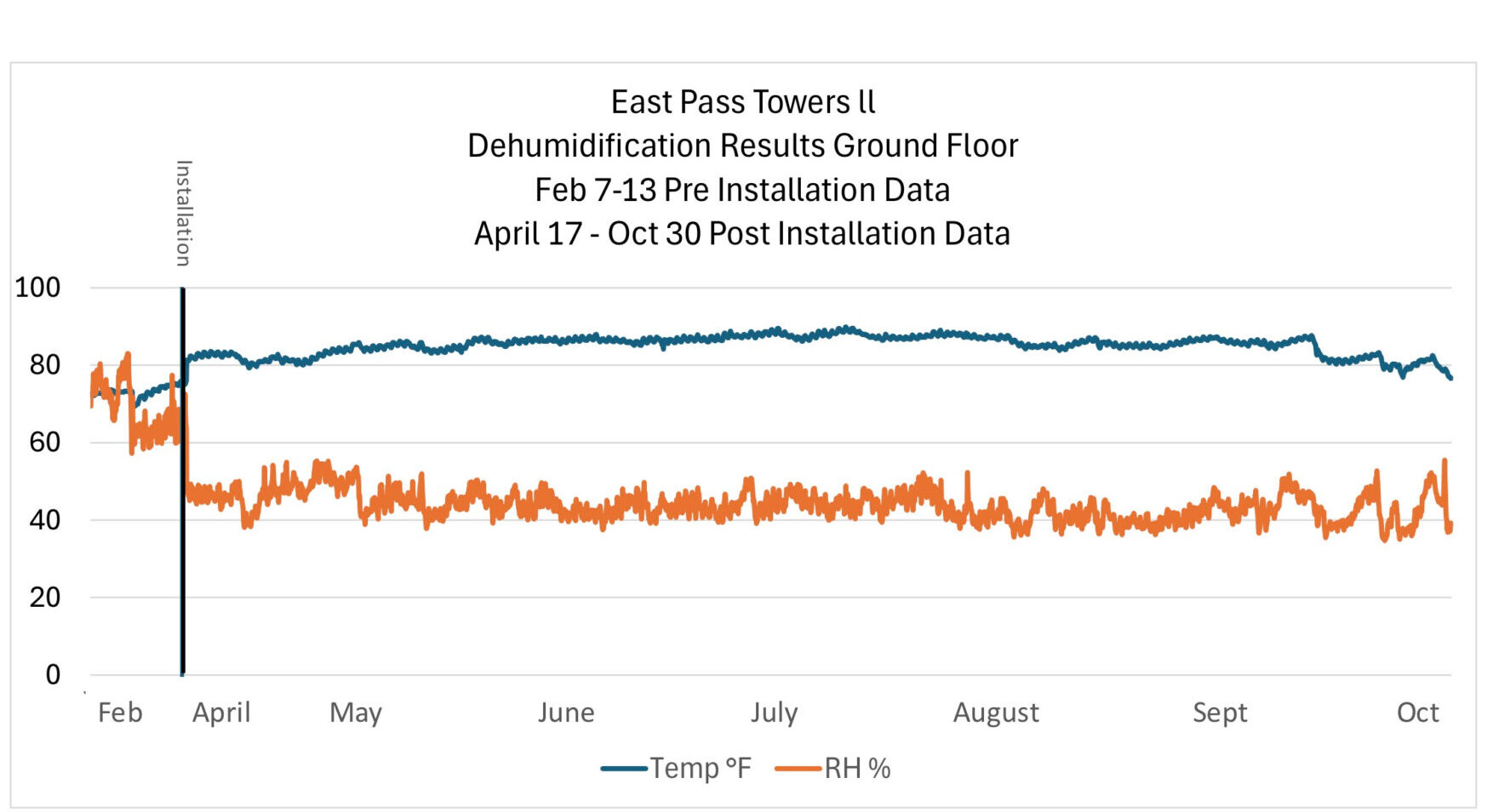
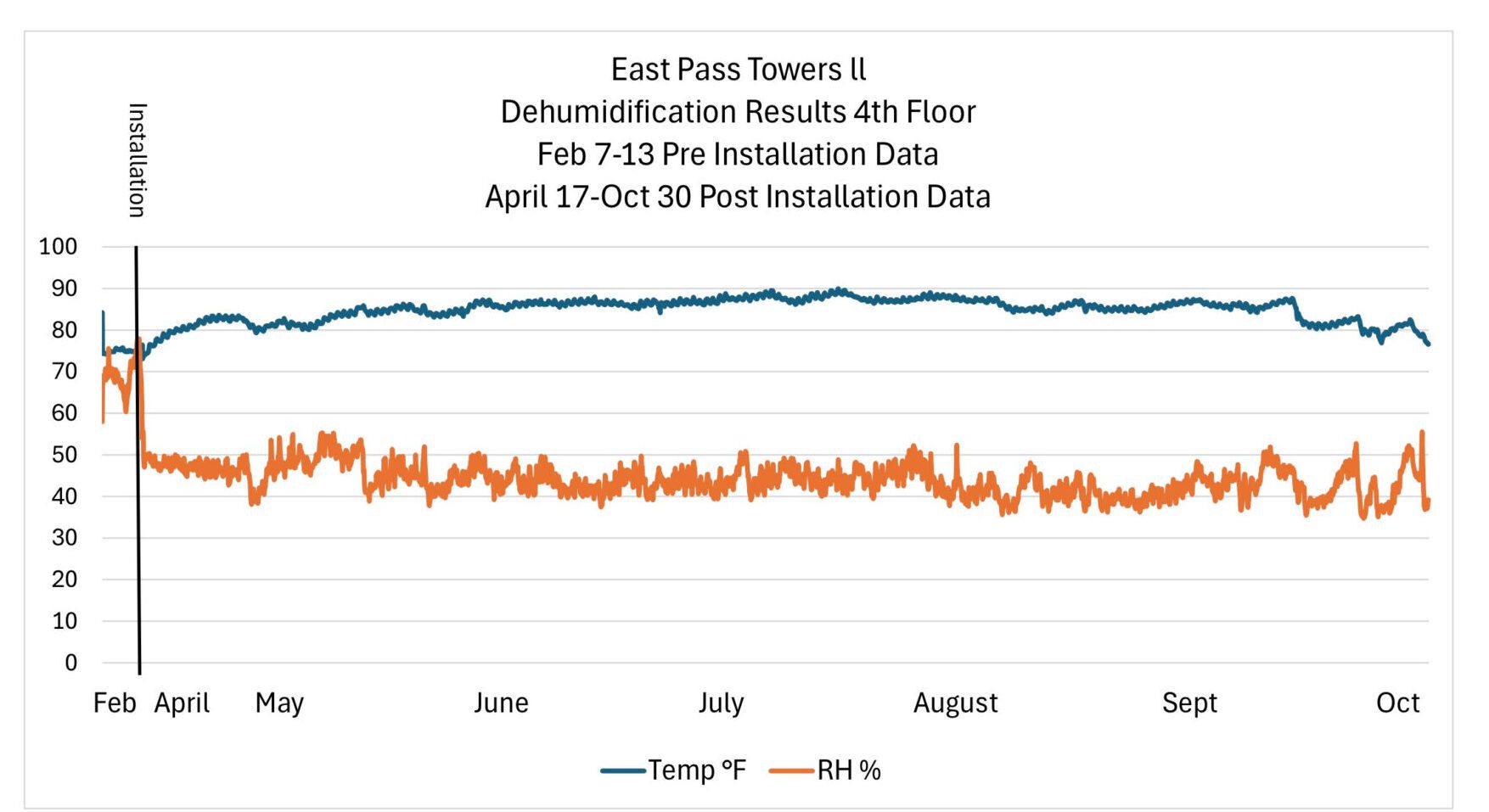
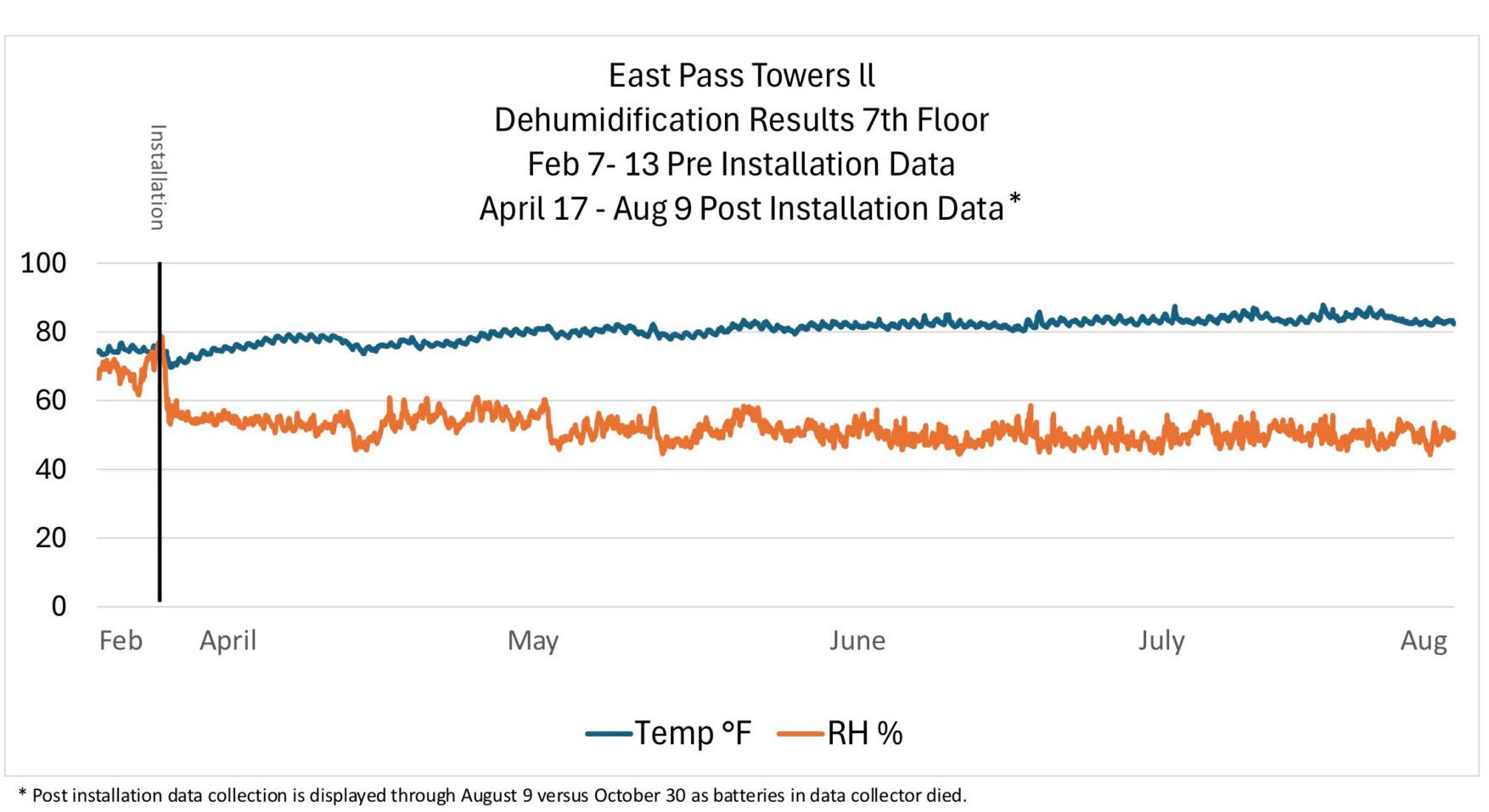
Indoor humidty dropped from 70.8% to 49.6% within days of installation and remained stable throughout the eight-month monitoring period.

Area Temperature Reduction
A cold and clammy environment transformed into a cool, comfortable space as the average temperature increase from 74ºF to 76.6ºF .
Property Management Feedback
VERIFIED REVIEW
★★★★★
I contacted Southern Climate Solutions to replace 2 current Desert Aire dehumidifiers in our 7 story condo building in Destin.
It is an open air atrium with 2 waterfalls. The current dehumidifiers were at the base of the waterfall but really did not suffice for all floors.
Michael and Lee came up with a solution to add dehumidifiers on the upper floors and use fans on floor 1 and 7 to move the air so that the dehumidifiers could capture and remove the moisture. They made many trips to contemplate the ultimate solution and a few trips afterwards to collect data and monitor the solution. It worked exactly like they envisioned.
Very talented and experienced in their field and craft.
Property Manager, East Pass Towers ll, Destin Florida
Building Overview
The condominium complex was designed around a large interior atrium that provides natural light and visual openness throughout the building.
While architecturally attractive, this design created a large vertical air volume that allowed humidity to accumulate and circulate throughout the building.
The indoor water features located also increased the moisture load through continuous evaporation.
Property Details
Building Type: Residential Condominium Complex
Location: Destin, Florida
Building Height: 7 Stories
Primary Issue: Atrium humidity and condensation
Existing HVAC: Central corridor and lobby cooling system
Project Gallery: 7-Story Atrium Environment
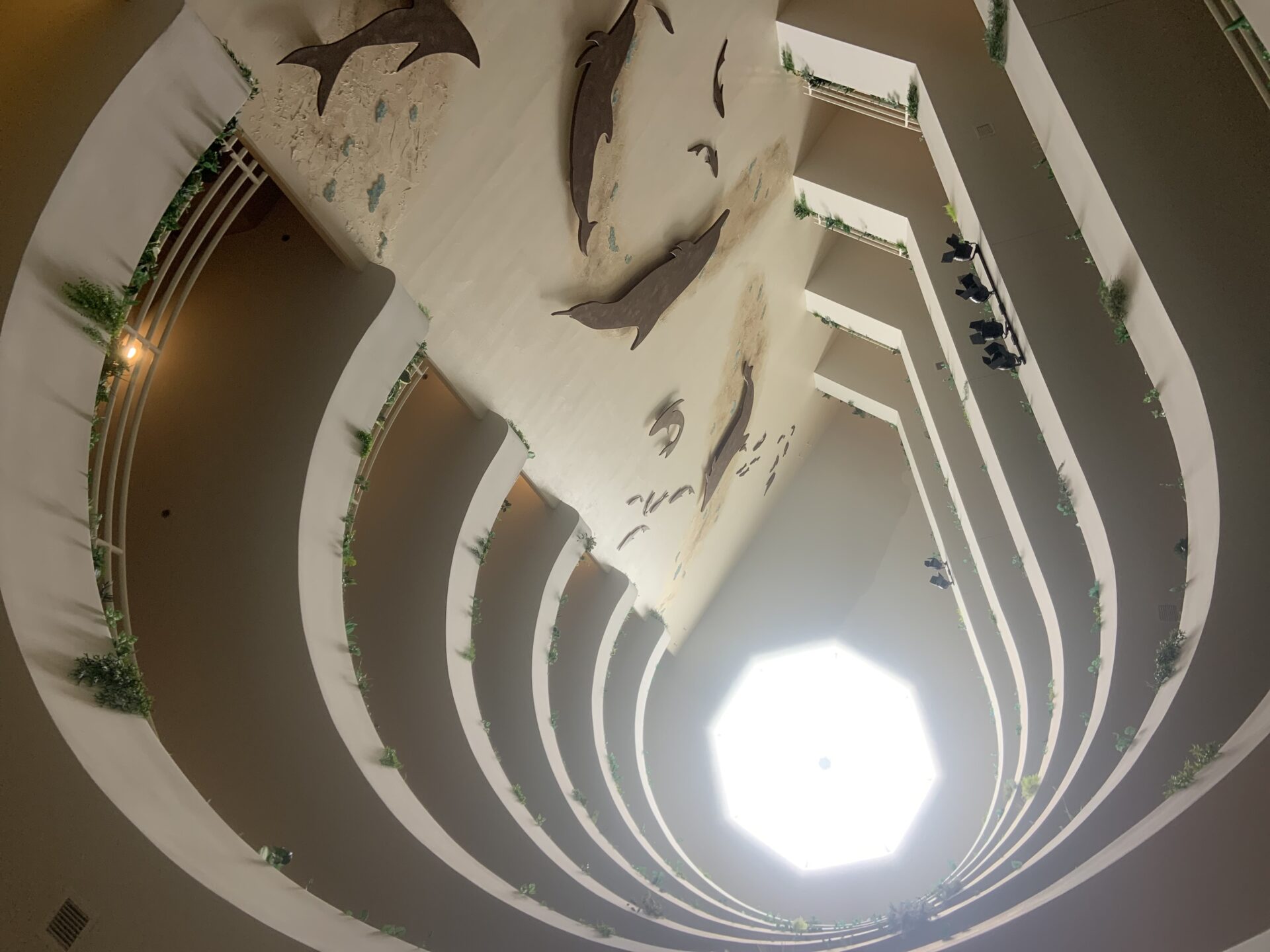
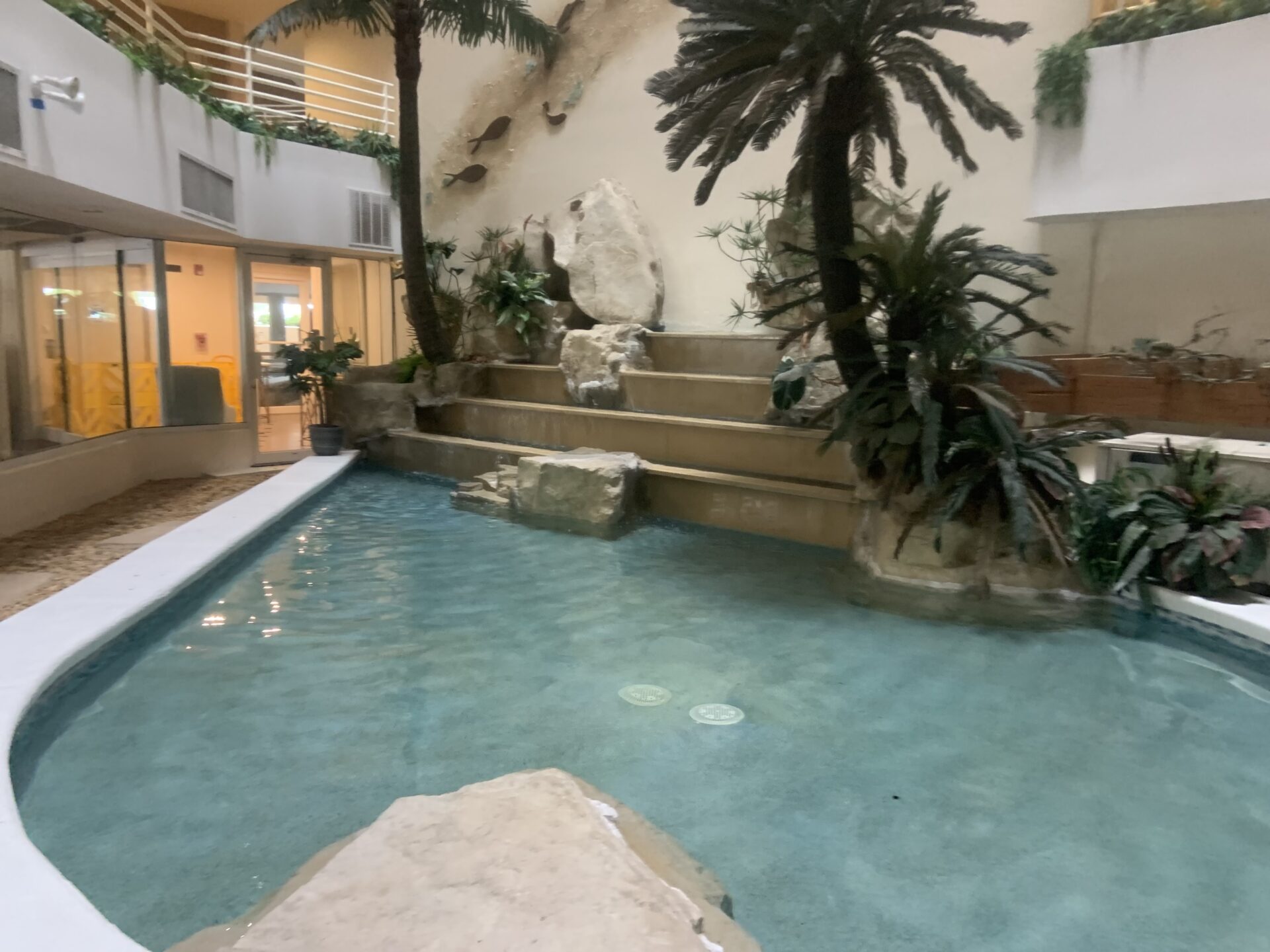
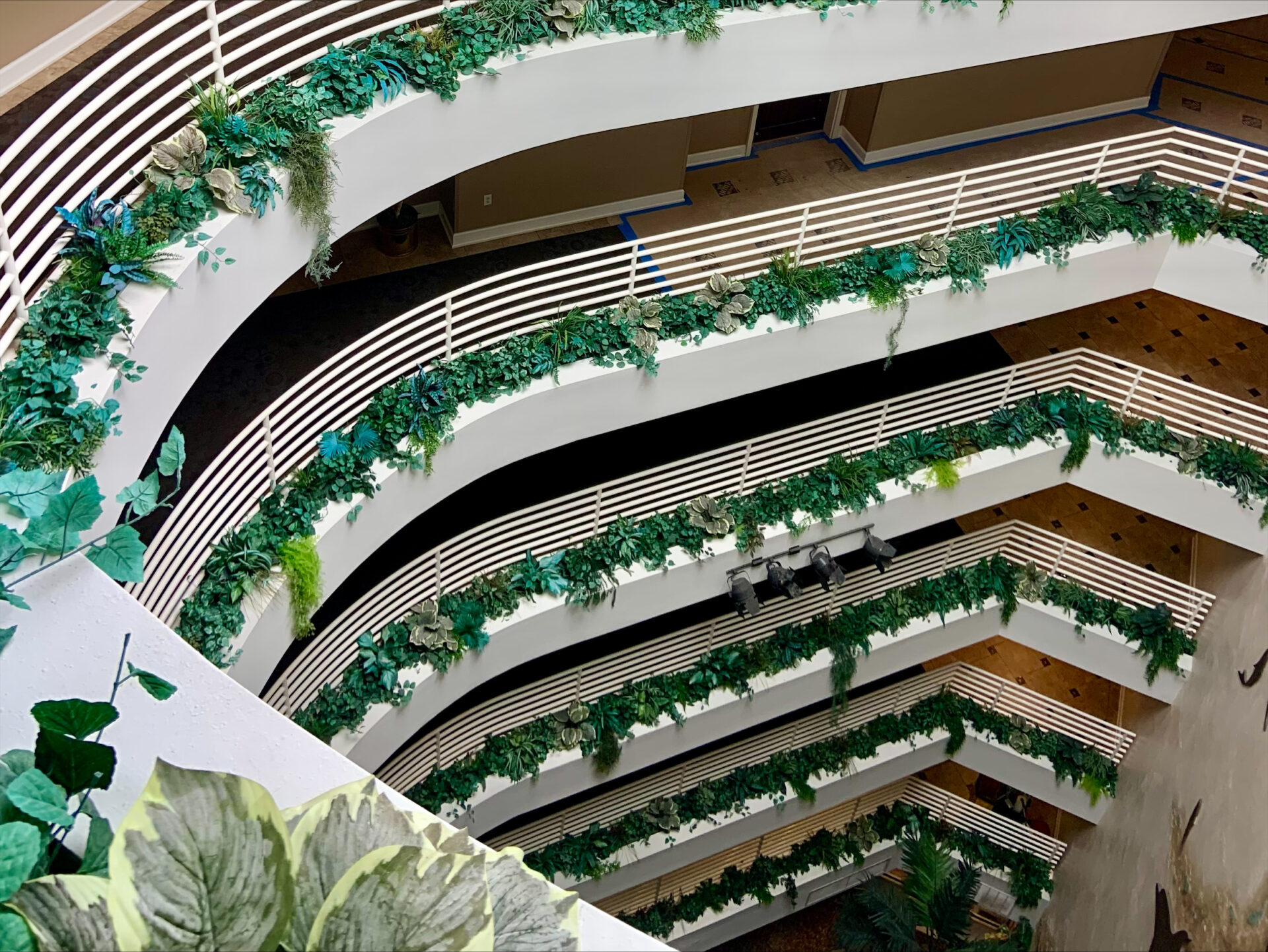
Large open air volume where HVAC struggled to control moisture.
Building Evaluation: Humidity Problems Observed
During our evaluation, moisture readings were taken and conditions in the space were noted as follows:
Elevated Moisture Readings
Moisture reading were taken throughout the common area, from the ground floor to the top of the seven-story structure. Indoor relative humidity average was 70.8%, well above the recommended 40%-50% level.
Clammy Environment
As noted by management, the indoor space was unusally clammy. A common response to high indoor humidity is to run the AC which often adds to discomfort and increases water vapor in the air. The average indoor temperature was 74.1 °F.
Lack of Air Circulation
Proper air circulation is vital to controlling indoor humidity. There was a lack of circulation thoughout the structure making humidity control very difficult. Two large refrigerant cooled dehumidifiers were previously installed on the ground floor but were ineffective at conditioning the space.
Slippery Floors
Safety concerns over condensation on floors was an issue for all residents. The ground floor is direct access to the attached parking garage and is accessed heavily by residents and guests.
Stack Effect
Warm humid air rose through the atrium, distributing moisture throughout upper floors. Temperatures rose as higher floors were accessed and evaluated.
Water Feature Challenge
The presence of a water feature creates additional challenges for the space since evaporation can add considerable moisture to the air.
Why HVAC Systems Alone Struggle With Humidity
Although the building’s HVAC system provided cooling for corridors and common areas, it was not designed to remove the large moisture loads present in a multi-story atrium environment. Additionally, the large industrial dehumidifier placed on the ground floor was ineffective and inefficient for the space.
Large Interior Air Volume
The seven-story atrium created a large air mass requiring dedicated moisture removal capacity.
Temperature Driven HVAC
The HVAC system operated based on temperature demand rather than indoor humidity levels.
Continuous Moisture Source
Evaporation from two waterfall features added constant humidity to the space.
Independent Commercial Dehumification Solution Installed
Southern Climate Solutions installed an independent commercial dehumidification solution designed specifically for the atrium’s air volume and moisture load.
Our goal was to properly climatize the indoor space, creating a balanced, comfortable, healthier and safer environment where potential hazards are mitigated.
Our commercial dehumidifiers are powerful, compact and self-contained, meaning there is no need for a roof top condenser.
The system will remove a combined total of up to 111 gallons of excess moisture per day.
System Design Included:
• 6-high-capacity commercial dehumidifiers strategically installed throughout the atrium’s seven floors.
• Air movers to aid in air circulation throughout the space
• Continuous humidity monitoring
• Year-round operation independent of HVAC cooling cycles
Data Result Charts
Benefits
Protect Equipment and Building Materials
- Protection of interior finishes and fixtures
- Stabilized atrium environment
- Reduced maintenance costs
Improve Store Safety and Comfort
- Eliminated moisture on floors
- Mitigate microbrial growth
- Improved indoor air quality
- Cool, comfortable environment
Lower HVAC Strain And Reduced Utility Expense
- Lowered demand on HVAC
- Reduced carbon footprint
Why Independent Dehumidification Control Was the Right Solution
Large open atrium environments require dedicated humidity control systems to maintain stable indoor conditions.
By installing an independent dehumidification system designed for the building’s air volume and moisture load, humidity could be controlled year-round without relying solely on temperature-driven HVAC cycles.
Schedule a Commercial Humidity Assessment
If your condominium common areas are experiencing persistent humidity problems, a properly designed independently dehumidification system can solve the issue.
Southern Climate Solutions
Southern Climate Solutions provides independent moisture control and dehumidification solutions for crawl spaces, slab homes, and commercial buildings across the Gulf Coast.
Gulf Breeze, Florida
(850)319-7489
Residential Services
Crawl Space Encapsulation
Crawl Space Dehumidification
Whole-Home Dehumidification
In-Wall Dehumidifiers for Small Spaces
Condominiums & HOAs
Convenience Stores
Hotels & Hospitality
Municipal & Office Buildings
Resources
Case Studies
Residential Service Areas
Contact
About
Privacy policy
© 2026 Southern Climate Solutions
Site Map