
COMMERCIAL CASE STUDY
Fire Station Humidity & Mold Mitigation | Pensacola, FL
Custom-Designed Dehumidification Solution to Restore Safe Conditions After Mold-Related Displacement
Measured Performance Results
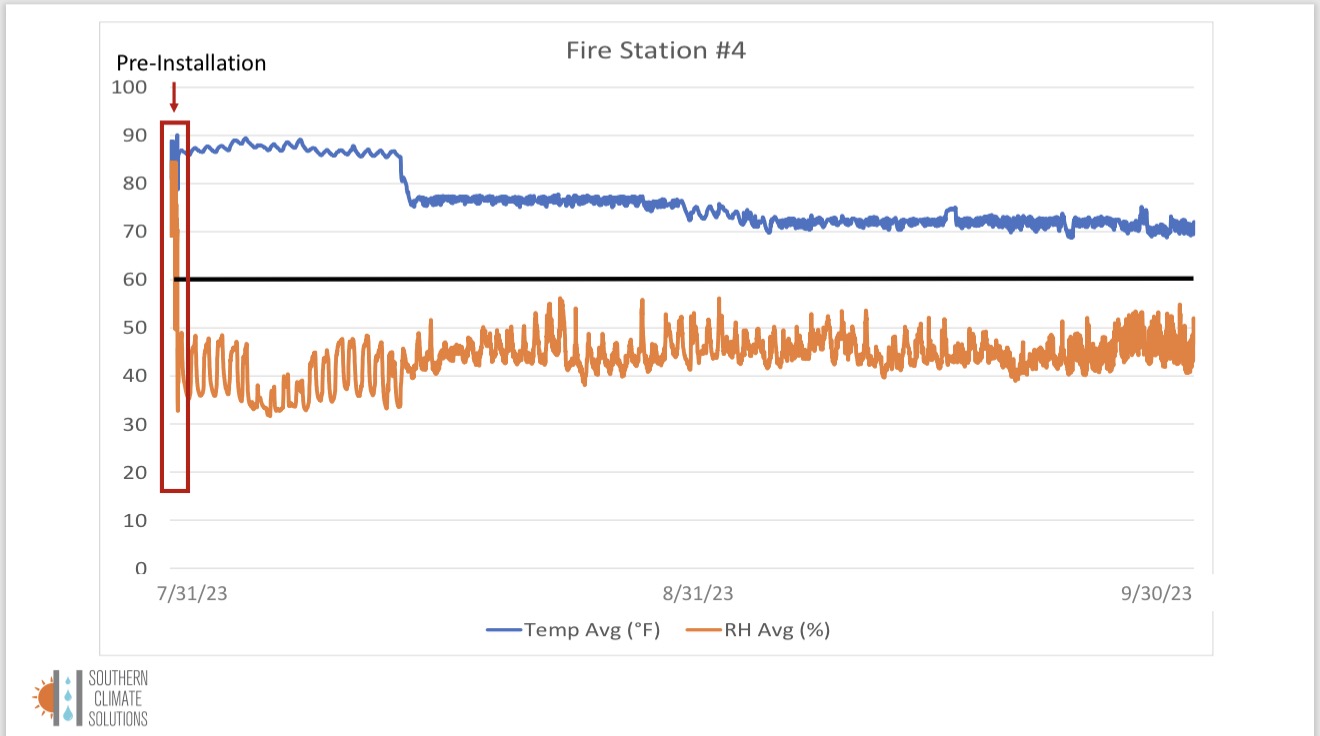
73.9% to 43.7%
Humidity Reduction 30.2%
3-Months
Data Colection Period
Mold Risk Down
Stabilized Indoor Conditions
Stabilizing Conditions After Mold-Related Displacement
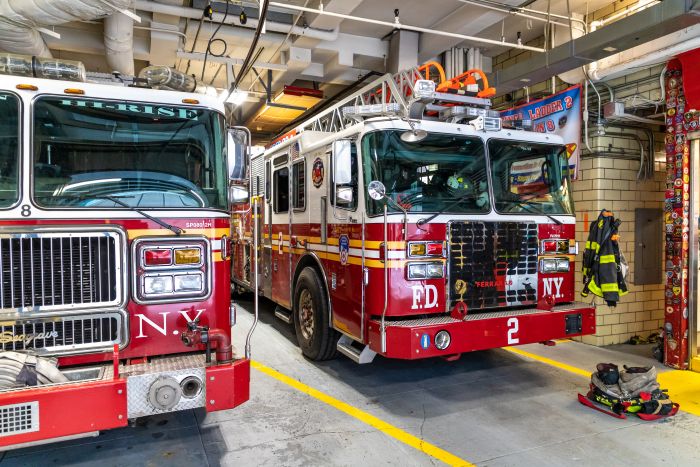
When humidity is left uncontrolled, critical facilities like fire stations can become uninhabitable. In this case, prolonged moisture issues contributed to mold conditions that led to personnel displacement.
Following third-party remediation, a custom-designed dehumidification system was installed to stabilize humidity levels, support mold mitigation efforts, and restore safe indoor conditions.
Severe Humidity Leading to Mold & Facility Shutdown
The fire station experienced persistently high indoor humidity levels, creating conditions favorable for mold growth throughout the building. Over time, this led to significant indoor air quality concerns and ultimately forced personnel to vacate the facility.
Standard HVAC operation was unable to control moisture effectively, allowing humidity levels to remain elevated and unstable.
- Sustained humidity near or above 70%
- Mold development impacting indoor air quality
- Loss of facility use for extended period
- Inability of existing HVAC system to manage moisture load
Project Overview
- Facility Type: Municipal Fire Station
- Location: Pensacola, FL
- Primary Issue: Elevated humidity leading to mold growth
- Impact: Personnel displaced for several months
- Solution: Custom-engineered commercial dehumidification system
- Verification: 3-month post-installation performance tracking
Custom Dehumidification System Designed for Continuous Control
A commercial-grade dehumidification system was designed specifically for the building’s conditions and existing HVAC infrastructure. The system works independently of the HVAC to control humidity, ensuring stable indoor conditions without reliance on overcooling.
This approach allowed for consistent moisture removal, improved air quality, and long-term environmental stability within the station.
Measured Performance & Verified Results
- 73.9% → 43.7% humidity reduction
- Sustained performance over 3 months
- Mold risk conditions eliminated
- Facility returned to safe operation
Post-installation monitoring over a three-month period confirmed consistent humidity control, with levels reduced from 73.9% to 43.7%. These stabilized conditions significantly reduced the risk of mold recurrence and restored a safe, functional environment for personnel.
Restoring a Critical Municipal Facility
With humidity stabilized and indoor conditions controlled, the fire station was able to return to normal operation. The installation not only resolved immediate mold concerns but also provided long-term protection against future moisture-related issues.
This project highlights the importance of engineered dehumidification in maintaining safe, functional environments in critical-use buildings.
Address Moisture Issues Before They Escalate
If your facility is experiencing high humidity, condensation, or indoor air quality concerns, a targeted dehumidification solution can restore control and prevent costly damage.