
COMMERCIAL CASE STUDY
Convenience Store Dehumidification Case Study | Panama City, Florida
Eliminating Ceiling Damage, Dripping Ductwork, and Ongoing Maintenance Issues in a High-Humidity Store Environment
Project Overview
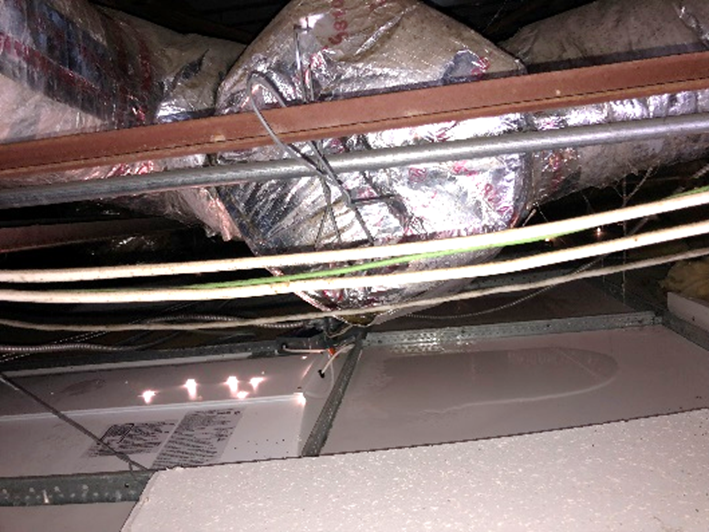
This convenience store was experiencing severe humidity-related issues, including condensation forming on ductwork and water actively dripping into the space. Continual damage to ceiling tiles, attic insulation, and infrastructure was evident. Excess moisture led to corrosion of building and electrical components. In addition, condensation on cooler doors made product display difficult.
Located in a high-humidity Gulf Coast environment, the store relied on traditional HVAC systems that were unable to adequately control indoor moisture levels.
The result was high maintenance costs, excessive strain on mechanical systems, uncomfortable environment for customers and employees, and potential safety concerns from water puddling on floors.
Property Details
Building Type: Convenience Store with Kitchen
Location: Panama City, Florida
Building Height: 1 story
Primary Issue: Sweating ductwork, damaged ceiling tiles, water puddling on floors & top of refrigeration coolers, corrosion, high indoor humidity
Existing HVAC: Rooftop standard cooling system
Measured Performance Results After Installation
Humidity Reduction
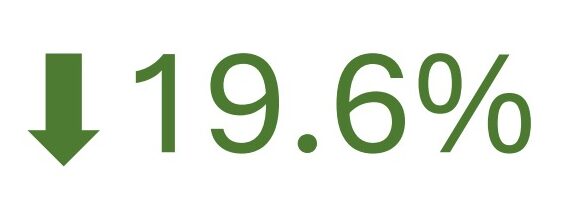
Indoor humidty dropped from 73.3% to 53.7% after installation and has remained stable.

Temperature Stabilized
Average temperature went from 68ºF to 72ºF, replacing cold and clammy with cool and comfortable.

Maintnenace Issues Reduction
Moisture issues were resolved eliminating expenses for ceiling tile replacement and electrical components.

Eliminated Active Hazards
Water from dripping ductwork ceased bringing puddling water on floors to an end.
Ongoing Condensation Was Causing Visible Damage and Constant Maintenance
Persistent condensation throughout this convenience store, particularly around supply ducts, ceiling diffusers, and areas near refrigeration and kitchen operations, was evident.
The issues went beyond comfort and what was visible to customers. Excess humidity was quietly damaging the building. Ceiling tiles were softening and collasping, insulation was saturated and metal components – including electrical panels – were corroding. Over time, this lead to costly repairs, safety concerns and unexpected maintenance issues. Even packaged goods and paper products can degrade in high-moisture environments, creating avoidable product loss and waste.
High humidity created uneven conditions throughout the store, making some areas extremely cold, and other areas warm and damp. The results is poor indoor air quality, increased odor retention, higher maintnenace costs on HVAC, and an uncomfortable environment for workers and customers. In stores with food prep, moisture-laden air can also interfere with proper ventilation performance, allowing grease and contaminants to linger longer than the should.
In this store, Southern Climate Solutions identified the most serious conditions as:
- dripping duct
- ceiling tile damage
- corrosion
- puddling floors
- condensating cooler doors
- high HVAC load
- maintnenace issues
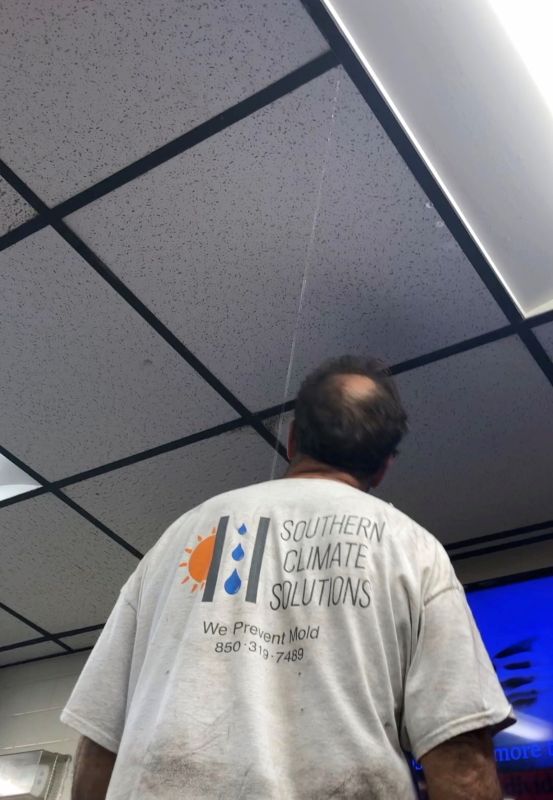
Pre-installation conditions showing severe duct condensation leading to steady water pouring from ceiling tiles in convenience store.
Pre-installation Building Conditions Due to High Indoor Humidity
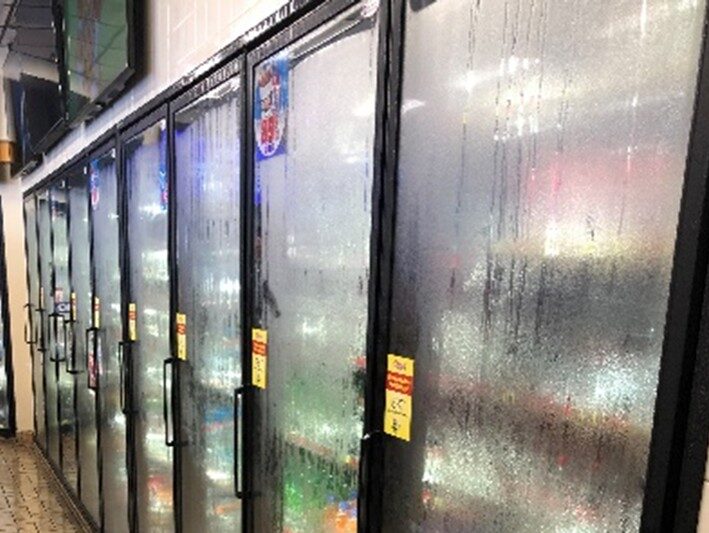
Condensation on Coolers
Pooled Water from Duct
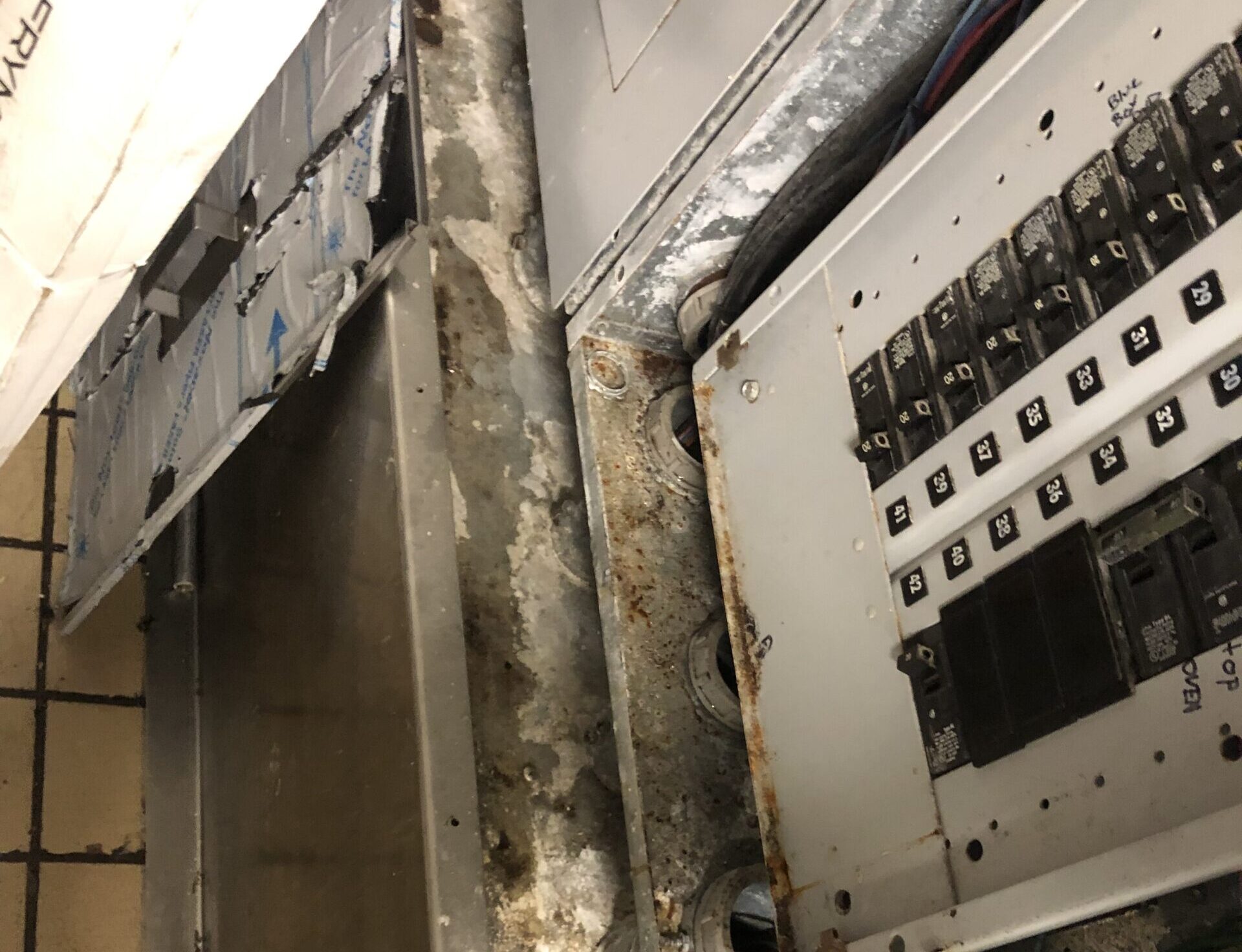
Electrical Panel Corrosion
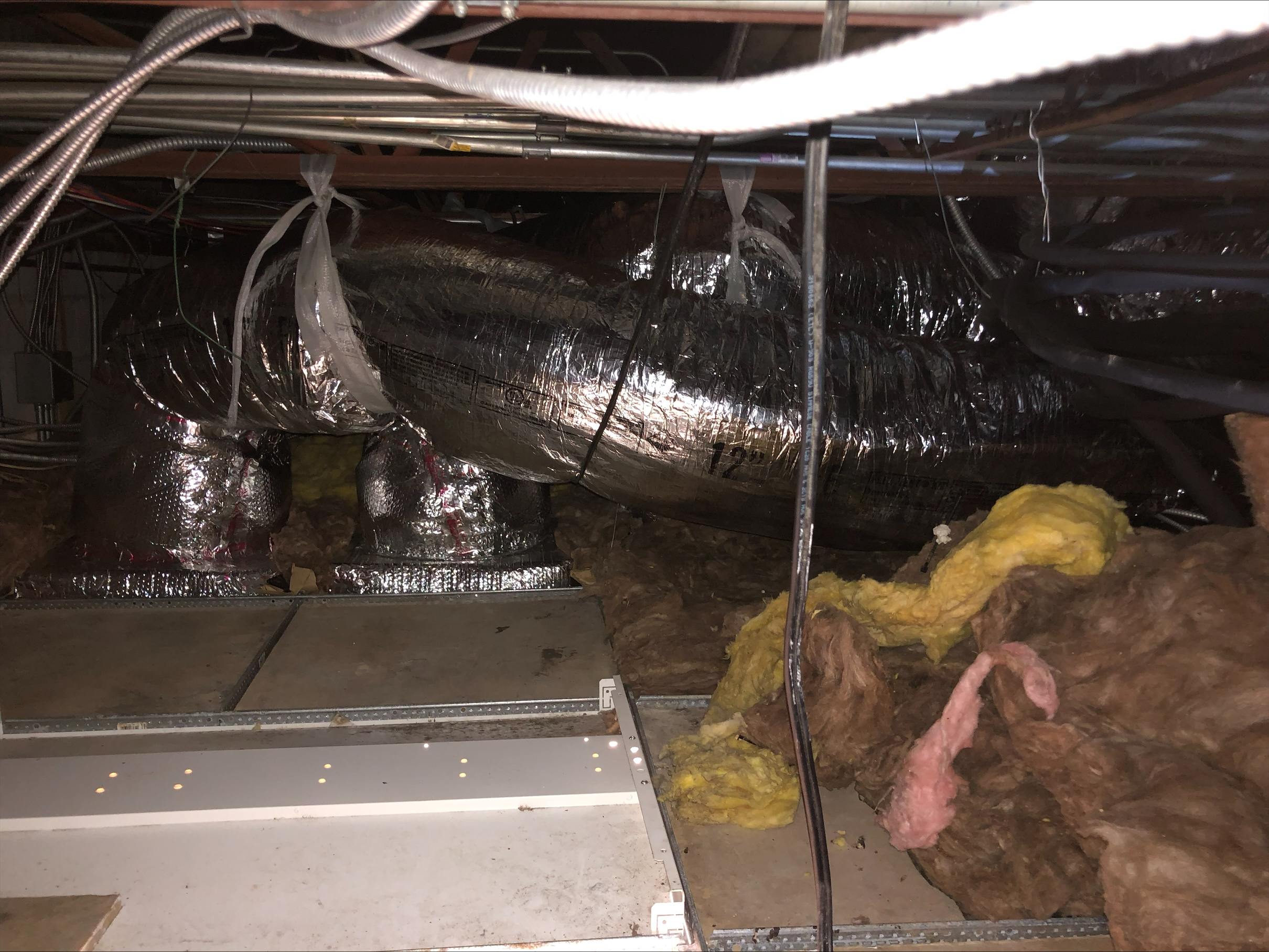
Saturated Duct and Attic Components
What Drives Excess Humididty in Convenience Stores
Constant Door Openings
High customer traffic means doors are opening all day, allowing warm, humid outdoor air to enter the store.
In Gulf Coast climates, this introduces a steady load of moisture that quickly overwhelms cooling systems.
Kitchen & Grill Exhaust
In stores with food service, grills, fryers and cooking equipment generate significant heat and mositure.
In addition, exhaust fans quickly pull conditioned air out of the space and negative pressure draws humid air in.
HVAC System Designed For Temperature, Not Moisture
Traditional HVAC systems are sized to maintain temperature – not to handle continuous latent moisture loads.
In humid climates, HVAC often struggles to remove moisture.
Why the Existing HVAC System Couldn’t Keep Up
Although the HVAC system was operating and maintaining temperature, it was not designed to handle the level of moisture present in the space.
In high-humidity regions, convenience stores and other buildings face constant moisture load from:
- frequent door openings
- outdoor air infiltration
- refrigeration equipment creating cold surfaces
The system kept the space cool—but humidity remained high, allowing condensation to continue forming throughout the store.
Kitchen Exhaust and Air Imbalance Were Making the Problem Worse
Because the store included a food service area, the condensation problem was intensified by how air was being moved through the building.
High-capacity exhaust systems continuously removed air from the space. Without properly balanced make-up air, this created negative pressure—pulling warm, humid outdoor air into the store.
Airflow Issue
- Exhaust hoods removing large volumes of air
- Insufficient conditioned make-up air
- Negative pressure pulling in humid outdoor air
Moisture Impact
- Increased indoor humidity levels
- HVAC system unable to remove latent load
- Moisture distributed throughout the store
Resulting Conditions
- Condensation on ducts and vents
- Dripping ceiling tiles
- Moisture forming on cold surfaces
A Targeted Moisture Control Approach
To resolve the issue, the focus shifted from temperature control to active moisture removal and humidity control.
A professional-grade dehumidification system was implemented to address the latent load and stabilize indoor humidity levels.
A combination of high-capacity independently ducted commercial dehumidifiers and strategically placed destratification fans were installed.
The system was designed to:
- remove excess moisture from the air
- properly circulate indoor air to aid in dehumidification
- reduce conditions that lead to condensation
- support the existing HVAC system rather than replace it
Reduced Damage, Less Maintenance, and a More Stable Environment
Following installation, the store experienced a noticeable reduction in condensation-related issues.
- Significant reduction in ceiling tile damage
- Elimination of visible dripping from ducts and vents
- Improved conditions around refrigeration and food service areas
- Reduced need for ongoing maintenance and repairs
- Cleaner, more professional store appearance
Post-Installation Controlled Conditions
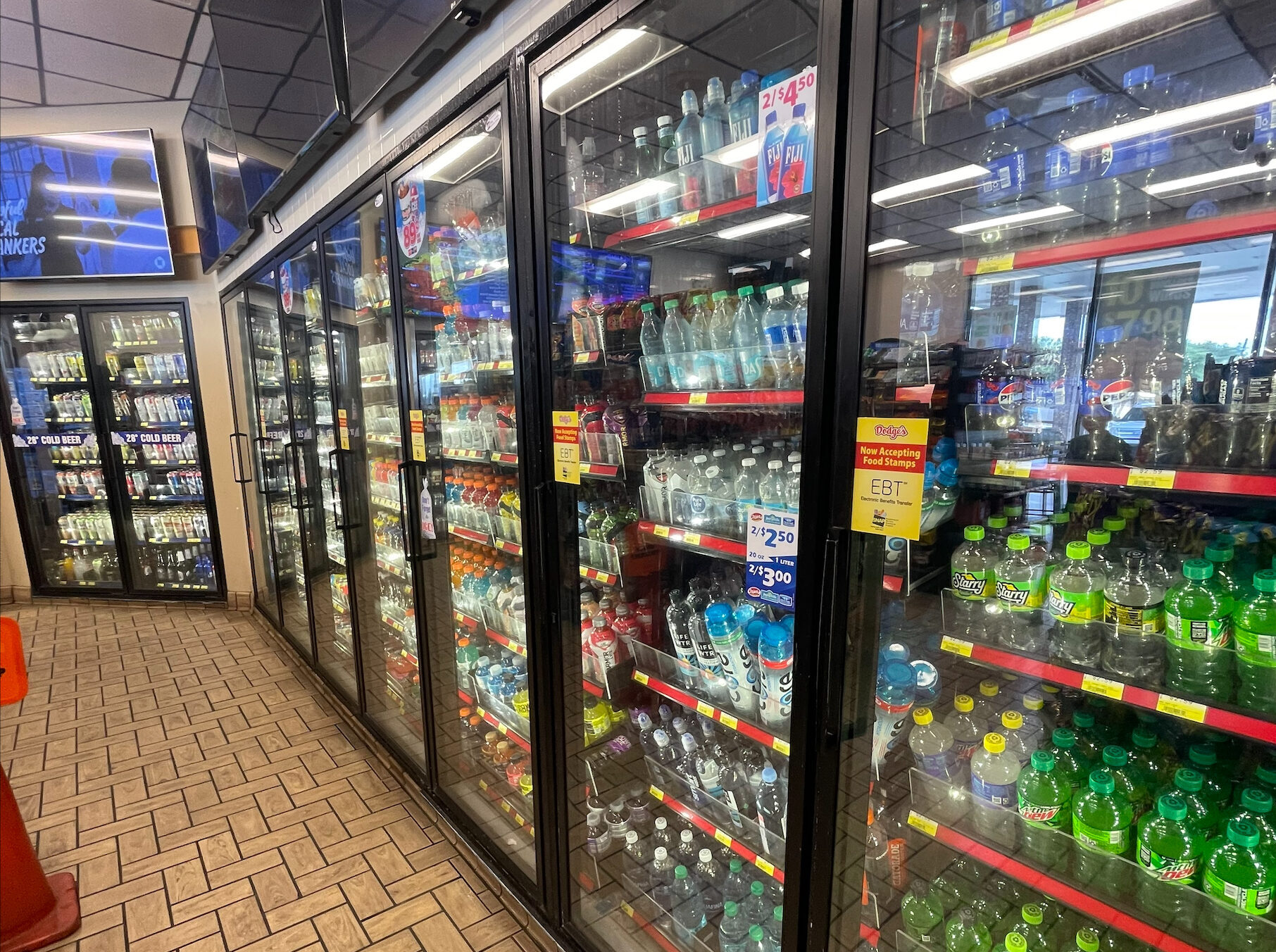
Clear Cooler Doors and Dry Floors
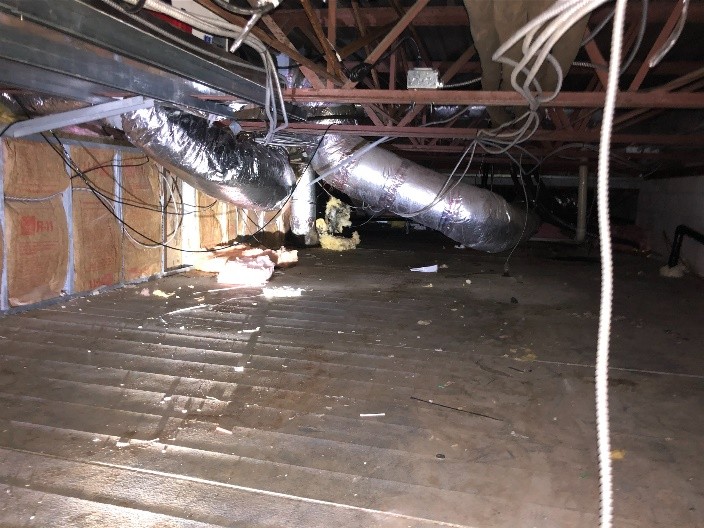
Dry Duct and Ceiling Components
MULTI-LOCATION ROLLOUT
Regional Implementation Across the Southeast
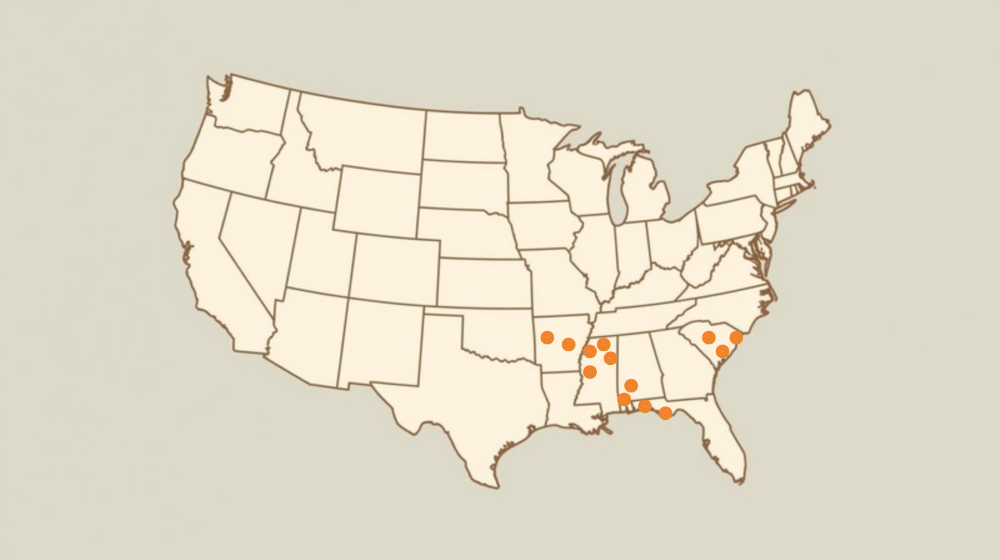
Following initial success, this solution was implemented across multiple convenience store locations throughout the Southeast.
From high humidity coastal environments to inland regions, each location experienced similar condensation challenges – requiring a consistent, scalable moisture control approach.
Alabama, Arkansas, Florida, Mississippi, South Carolina
Stop the Cycle of Condensation and Ongoing Repairs
In convenience stores—especially those with food service—condensation is often not just an HVAC issue. It’s a moisture control problem.
Without addressing humidity directly, stores can remain stuck in a cycle of:
- recurring damage
- repeated maintenance
- and ongoing operational frustration
With the right approach, those issues can be resolved at the source.