
Municpal Building Humidity Control
Commercial Dehumidification for City & Government Facilities
Humidity Challenges in Municipal Buildings in Southeastern Climates
Municipal buildings across the Southeastern United States face persistent high humidity levels that traditional HVAC systems were never designed to manage.
From Florida and Alabama to Georgia, Mississippi, Louisiana and beyond, municipal facilities operate in climates where outdoor moisture threatens the indoor building environment.
City halls, public safety buildings, libraries, recreation centers, and administrative offices often experience condensation, musty odors, and moisture-related infrastructure deterioration — especially during mild weather when air conditioning cycles off.
Southern Climate Solutions installs independently ducted commercial dehumidification systems that control humidity even when HVAC systems are not running, protecting public buildings and taxpayer-funded infrastructure from long-term moisture damage.
Featured Case Study
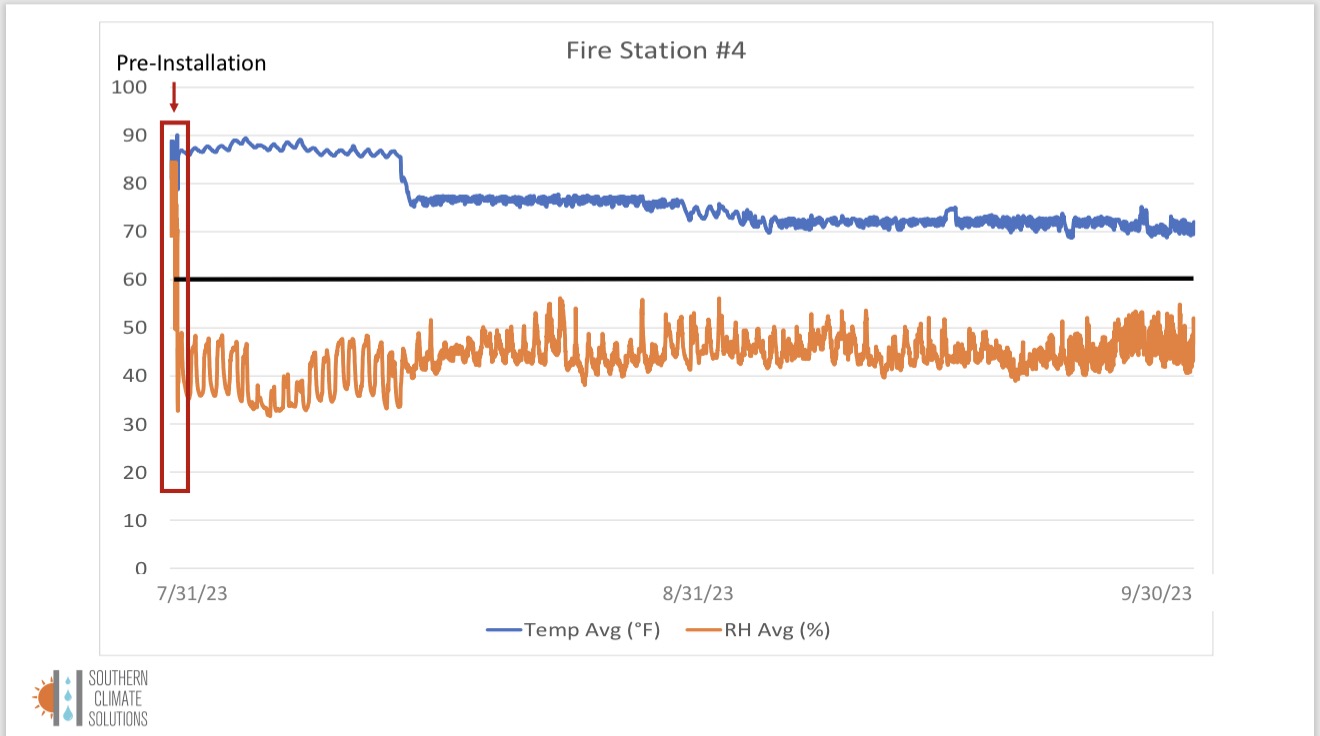
Featured Project: Municipal Fire Station - Pensacola, FL
After mold-related displacement, humidity levels were reduced from 73.9% to 43.7% using a custom-designed dehumidification system, restoring safe indoor conditions and supporting long-term stability.
Common Humidity Problems for Municipal Buildings
When humidity is not controlled independently from HVAC operation, moisture issues often begin to appear throughout the facilty. These problems can affect occupant comfort, indoor air quality, and long-term building durability.
- Condensation on windows and metal fixtures
- Ceiling tile staining
- Musty odors in public spaces
- Mold growth in storage areas
- Rust on mechanical equipment
- Warping of doors and trim
- Degraded indoor air quality
- Elevated indoor humidity levels
These warning signs often become more noticable during mild weather, after hours operation, and seasonal periods when cooling demand drops but outdoor humidity remains high.
Why Municipal Buildings Develop Moisture Problems
Municipal facilities often include a wide range of spaces with varying humidity loads and occupancy patterns. In Southeastern U.S. climates, outdoor dew points remain elevated for much of the year. When HVAC systems cycle based on temperature rather than moisture load, humidity accumulates inside the building envelope.
High Outdoor Dew Points
Southeastern U.S. climates regularly experience dew points above 70° F. This moisture enters buildings through ventilation systems, entrances and building envelope leakage.
HVAC Systems Designed for Cooling
Most HVAC systems cycle based on temperature demand. During mild weather, cooling systems run less frequently, allowing humidity to accumulate inside the building.
Large Air Volumes
Municipal Buildings often contain large open areas and public spaces with significant air volume, making it difficult for standard HVAC systems to remove moisture effectively.
Varying Occupancy Levels
Council meeting, recreation programs and public events can dramatically increase indoor moisture.
Ventilation Requirements
Public buildings require higher ventilation rates, bringing additional humid outdoor into the facility.
Mechanical Infrastructure
Electrical rooms and equipment spaces often recieve limited airflow, allowing humidity to concentrate.
Experiencing Humidity Issues in Your Municipal Building?
Our independent systems stabilize indoor humidity levels to eliminate persistent moisture issues.
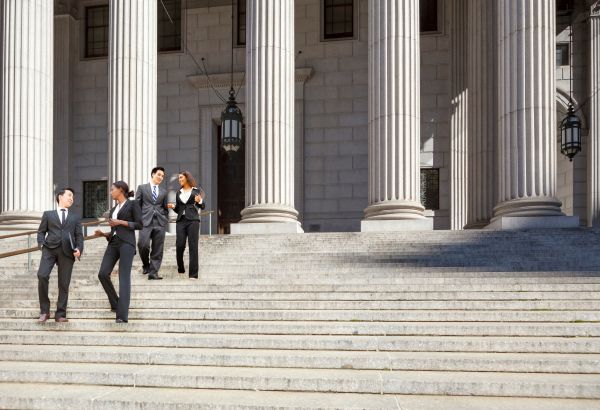
Areas of Municipal Building Most Affected by Humidity
Municipal buildings contain a wide variety of environments that are vulnerable to elevated moisture levels.
City Halls & Administrative Buildings
Public lobbies, meeting rooms, and office spaces can develop condensation, musty odors, and elevated humidity levels.
Police & Fire Stations
Locker Rooms, equipment areas, apparatus bays and kitchens frequently experience moisture buildup.
Libraries & Record Storage
Paper archives and sensitive materials require stable humidity levels to prevent deterioration.
Public Works & Utility Buildings
Mechanical systems and elecrtrical panels are vulnerable to corrosion when humidity remains elevated above 60%.
Community Centers
Shared public spaces experience humidity fluctuations due to variable occupany levels.
Recreation & Event Centers
High occupancy and physical activity create significant indoor moisture loads.
Why HVAC Systems Struggle With Elevated Moisture in Highly Humid Environments
Most commerical HVAC systems are designed to control temperature, not to remove large amounts of moisture from the air.
In Southeastern climates, outdoor air often carries significant humidity that enters building through ventilation systems and normal air infiltration.
When HVAC systems cycle based on temperature demand, they may not run long enought to remove this moisture.
Independently Ducted Commercial Dehumidification Systems
Southern Climate Solutions designs, installs and maintains commercial-grade dehumidification systems that operate independently from HVAC equipment, maintaining stable humidity levels year-round.
Independent Operation
Systems remove moisture even when cooling equipment is not running.
Balanced Air Distribution
Fully ducted systems distribute conditioned air evenly throughout the facility.
Year-Round Stability
Maintains consistent relative humidity levels regardless of seasonal temperature changes.
Each System is Engineered Based on:
- Building cubic feet
- Air volume and airflow patterns
- Existing HVAC configuration
- Occupancy load
- Outdoor dewpoint exposure

Why Independent Humidity Control Matters for Government Facilities in Humid Climates Across the Southeastern United States
Municipal building must maintain safe, stable environments for employees and the public while protecting taxpayer-funded infrastructure. In high-humidity climates, independent commercial dehumidification will:
- Improve indoor air quality
- Preserve public records and archives
- Provide a safe work environment
- Improve overall comfort & productivity
- Reduce mold remediation risk
- Prevent corrosion in mechanical systems
- Reduce maintenance costs
- Reduce HVAC load; lower carbon footprint
Commercial Dehumidification Across the Southeastern United States
Southern Climate Solutions provides commercial humidity control systems for municipal buildings across the Southeastern U.S., including Florida, Alabama, and the Gulf Coast region. Our systems are designed specifically for buildings operating in high-humidity climates, and help to maintain dry, comfortable environments year-round.
Schedule a Commercial Humidity Assessment
If your government buildng is experiencing sweating ductwork, condensation, microbial growth or persistent humidity problems, a properly designed independently ducted commercial dehumidification system can solve the issue.